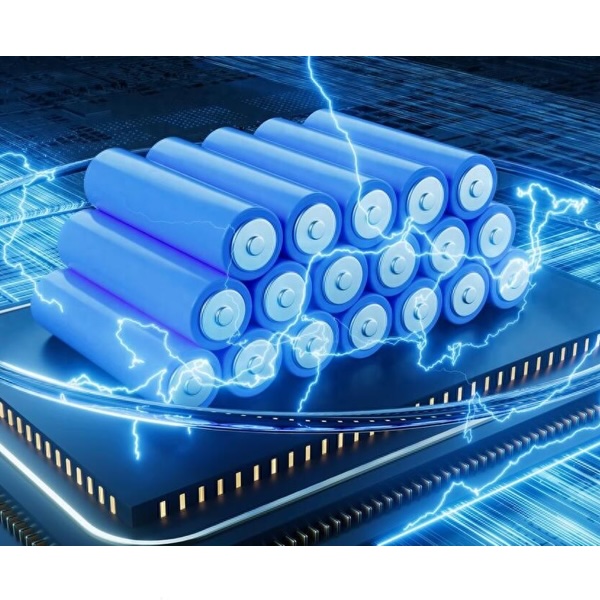
What is lithium ion battery?
Lithium batteries are a type of battery that uses lithium metal or lithium alloy as the positive/negative electrode material and a non-aqueous electrolyte solution. The lithium metal battery was first proposed and studied by Gilbert N. Lewis in 1912. In the 1970s, M. S. Whittingham proposed and began researching lithium-ion batteries. Due to the highly reactive chemical properties of lithium metal, its processing, storage, and use require very high environmental standards. With the development of science and technology, lithium batteries have become mainstream.
Why lithium ion battery?
1. The energy is relatively high. It has a high energy storage density, reaching 460-600Wh/kg, which is about 6-7 times that of lead-acid batteries;
2. Long service life, with a service life of over 6 years. The battery with lithium iron phosphate as the positive electrode can be charged and discharged at 1C (100% DOD), with a record of 10000 uses;
3. High rated voltage (single working voltage of 3.7V or 3.2V), approximately equal to the series voltage of three nickel cadmium or nickel hydrogen rechargeable batteries, making it easy to form a battery power pack; Lithium batteries can be adjusted to 3.0V through a new type of lithium battery voltage regulator technology to be suitable for small electrical appliances.
4. It has high power bearing capacity, among which the lithium iron phosphate lithium-ion battery used in electric vehicles can achieve the ability to charge and discharge at 15-30 ° C, which is convenient for high-intensity starting acceleration;
5. The self discharge rate is very low, which is one of the most prominent advantages of this battery. It can generally achieve less than 1% per month, which is less than 1/20 of nickel hydrogen batteries;
6. Lightweight, with a weight of about 1/6-1/5 of lead-acid products under the same volume;
7. Strong adaptability to high and low temperatures, can be used in environments ranging from -20 ℃ to 60 ℃, and after processing, can be used in environments ranging from -45 ℃;
8. Green and environmentally friendly, regardless of production, use, or disposal, it does not contain or produce any toxic or harmful heavy metal elements or substances such as lead, mercury, cadmium, etc.
9. Production basically does not consume water, which is very advantageous for China, which is short of water.
Specific energy refers to the energy per unit weight or unit volume. Specific energy is expressed in Wh/kg or Wh/L. Wh is the unit of energy, W is watts, and h is hours; Kg is kilogram (weight unit), L is liter (volume unit).
Accelift LITHIUM BATTERY APPLICATIONS
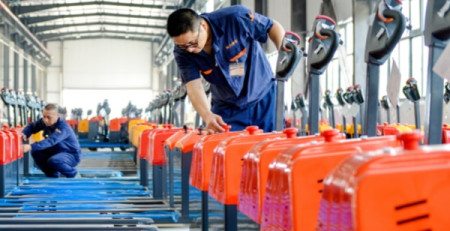
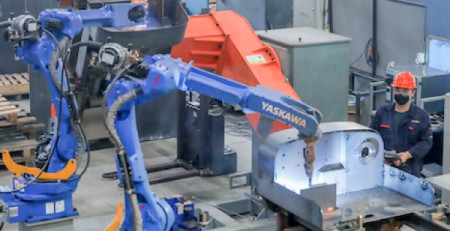
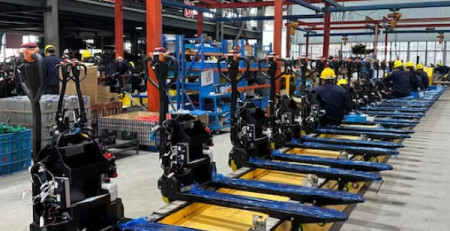
With years of experience and achievements in research and development, Accelift has been dedicated to developing its lithium battery technology. This expertise has been applied for Accelift trucks and after-sales services to establish a cohesive product support system for valued customers for work productivity and truck efficiency optimization.
Combining all the benefits of lithium technology with an intelligent BMS, the LiST series showcases two major smart applications: telematics and Bluetooth services. Telematics can be used to monitor hours used and miles driven in real time. Bluetooth service streams fault information and sync diagnostics data from a truck to operator’s mobile phone. The wireless communication technology that sends data in real time over long distance has allowed Accelift to develop remote diagnostic technologies for one-stop after-sales services.
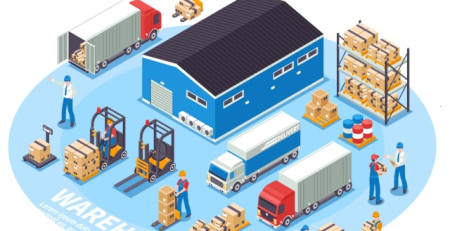
Accelift trucks are widely used in various industries, such as transportation and logistics, retail sector, general manufacturing, construction, food, and beverage industry. It proofs that using lithium battery products becomes a more popular demand. More manufacturing professionals are aware of benefits to adopt lithium electric forklift — less pollution, higher energy efficiency, and lower maintenance costs.